Use cases · Case study
OneBlade
Go-to-market for Philips. Zero to €55M in year one, a new category.
01 Context
the starting pointPhilips had built a new kind of shaver, and the BASES II concept test came back good but not great. The business got cold feet: the product did not perform the way the category's buyers expected, because it did not shave close enough. That verdict spurred Dylan and the Business Director to argue for a go-to-market accelerator, and to set it up with a programme manager: one team, one product, an external accelerator partner Dylan chose, and a design team he ran, shaped on his startup experience.
02 Constraints
what made it hardA first-of-its-kind product had no demand curve to read, no category conventions to lean on, and a business already doubting it. Who would buy, what they would pay, what the thing should even be called: none of it could be settled by opinion.
03 Decisions
what the work wasThe team turned the closeness verdict on its head. A product that does not shave close is made for men who do not want a clean shave: younger men, who carry stubble and shave less often. The repositioning followed those habits, and user-generated content carried the proof. Show, don't tell.
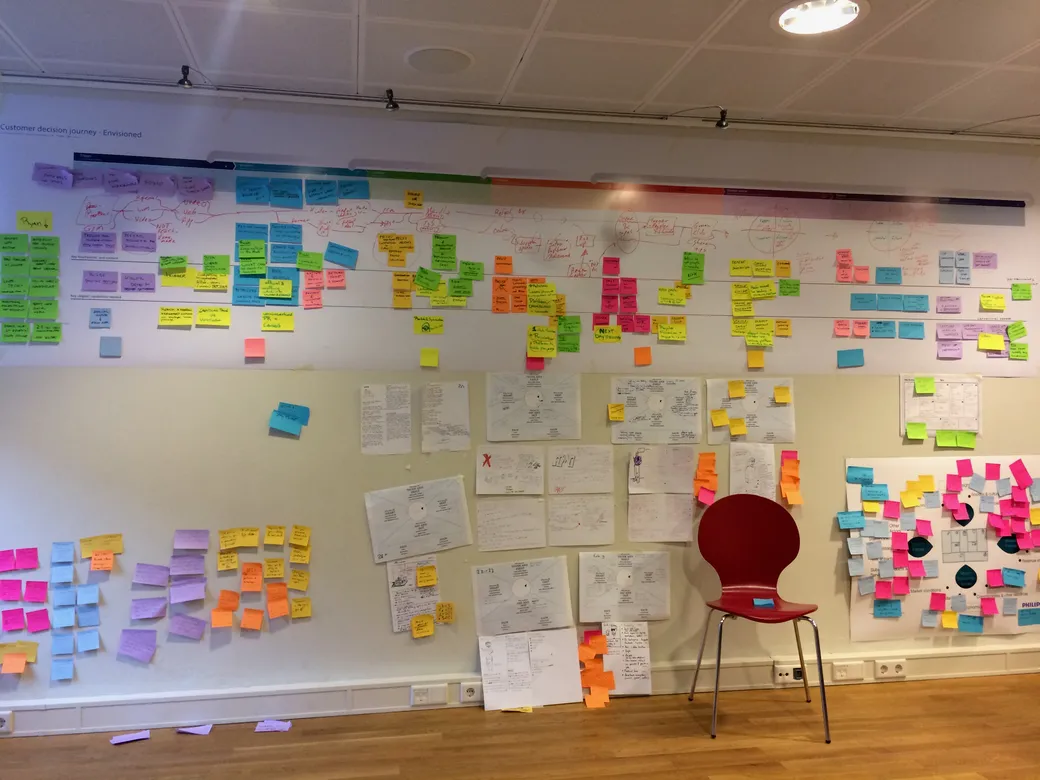
Dylan structured the workshops, directed the visuals, wrote copy, and built the consumer journey three times over: as a poster, as a plan, then as the reality. Claims earned their place through a test ladder: video ad A/B tests, landing page A/B tests, paper prototypes, then physical prototypes sent to live testers recruited through the funnel itself, each round checking performance against the promise, with the funnel converting at up to 8.5%. The reviews brought back a signal no test was designed to catch: testers' girlfriends liked the product enough to hide it for their own use.
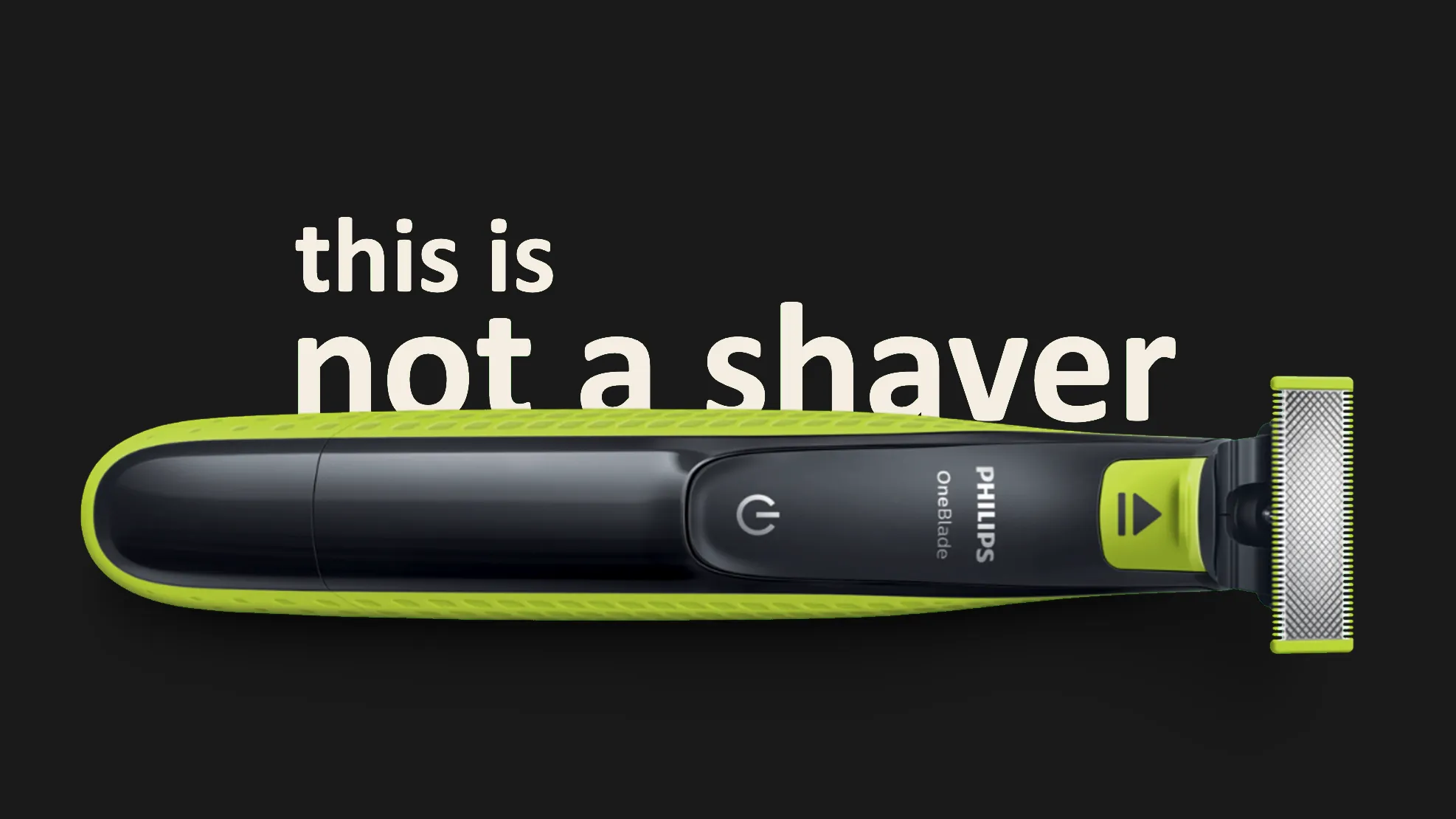
The line work ran the same way: five directions, more than forty lines, tested live. The business could never settle whether the product was a shaver or a trimmer. Dylan read it as neither, closest to shaver, so he wrote the line that said what it was not: 'this is not a shaver'. It beat every contender in testing, including the agency's set. The product had no name yet; when the naming ran later, OneBlade won, and the launch carried the full line: 'This is not a Shaver, this is OneBlade.' All of it rolled up into the playbook the launch actually ran on.
04 What landed
what the launch returnedPhilips' reported results: €55M and the €100M pace per Philips' Business Lead, Shaving & Grooming. Dylan's seat was design lead for the go-to-market accelerator; the commercial programme had its own leads.
The method formalises what this launch ran on: direction, difference and discipline.